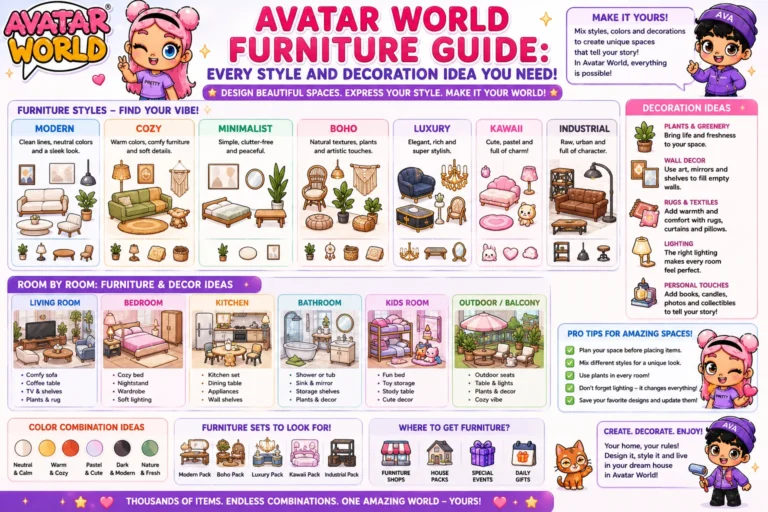
Avatar World House Designs: Best Layouts and Home Inspirations for 2026!
The difference between a good Avatar World home and a great one is rarely about how many furniture pieces you have. It is about how those pieces are arranged and what concept the whole space is built around.
These Avatar World house designs are complete layout concepts from the ground up. Each one has a theme, a room structure, a color approach, and the specific furniture decisions that make the design work. You can take any of these as a starting point and build it exactly, or use it as inspiration for something that feels more personal.
I have built and rebuilt homes across multiple avatar slots in this game, and these are the layouts that consistently look the best and work the most effectively for roleplay.
How to Think About Avatar World House Designs Before You Build
Before placing a single piece of furniture, every great Avatar World house design starts with two decisions.
The concept. What kind of person lives in this home? A fashionable teenager? A working professional? A cozy family? A creative artist? The character concept determines everything that follows.
The room structure. How many rooms does the home have, and what is each one for? Decide this before you open the home builder. A home built without a room plan almost always ends up with one or two overdeveloped rooms and the rest left unfinished.
Once you have the concept and the room structure clear, the furniture choices become obvious rather than arbitrary.
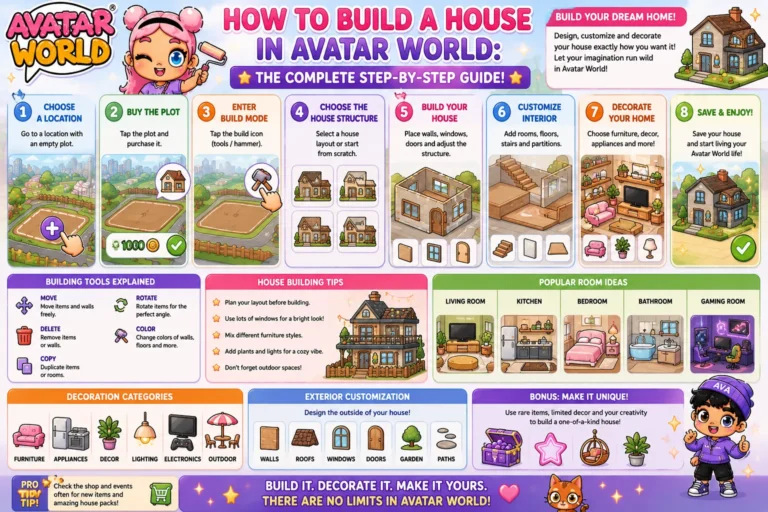
For the full guide on the mechanics of placing furniture and setting up individual rooms, see our Avatar World home building guide.
Design 1: The Modern City Apartment
Concept: A stylish young professional who just moved into their first real apartment. Clean, intentional, and slightly minimal. Every piece is chosen rather than accumulated.
- Open-plan living and kitchen area (no wall between them)
- One bedroom
- One bathroom
- A small home office corner within the living area
Color palette: White walls throughout. Light wood flooring in the living areas. A slightly warmer tone in the bedroom. No more than two accent colors are used across the entire home.
Living and kitchen area: A sleek low-profile sofa in a neutral tone (grey or white) facing a wall-mounted television unit. A glass or light wood coffee table. Kitchen counter units along one wall with the dining table positioned between the kitchen zone and the living area. Two or four dining chairs in a matching or intentionally contrasting style.
Bedroom: A medium-sized bed against the main wall. Two matching bedside tables. A wardrobe along the opposite wall. A single floor lamp beside the bed. No rugs, or a single minimal rug under the bed.
Office corner within the living area: A desk in the corner farthest from the sofa. A desk chair. One bookshelf beside it. A desk lamp. This setup uses the open-plan space efficiently without needing a dedicated office room.
Key design principle: Everything in this home is kept to a minimum. The impact comes from quality and consistency, not quantity. Resist adding extra pieces.
Design 2: The Cozy Family Home
Concept: A family with children. Warm, lived-in, full of personality. Every room has something going on, and the home feels like it is actually used every day.
- Large living and dining area
- Full kitchen
- Master bedroom
- Kids’ bedroom
- Bathroom
Color palette: Warm neutrals throughout. Cream or warm white walls. Honey or dark wood flooring. Accents of soft green, terracotta, or dusty blue in the textile-based decoration items.
Living and dining area: A plush sofa large enough for the whole family. A coffee table with items on it, books, a small plant, and a remote. A bookshelf filled with objects. A dining table large enough for the whole household with mismatched chairs in coordinating colors. A large rug under the main seating area.
Kitchen: Counter units along two walls in an L-shape if the space allows. The stove and fridge are next to each other. A fruit bowl or kitchen plants on the counter. The kitchen should feel like cooking actually happens here.
Master bedroom: A large bed with a full headboard. Both bedside tables with lamps. A wardrobe. A full-length mirror. Plants in the corner.
Kids’ bedroom: A smaller or bunk-style bed. A small desk for homework. Colorful decoration items. Soft toys on shelves. This room should look like a child picked the items rather than an adult with a design aesthetic.
Key design principle: This home should feel slightly imperfect. Not everything matching exactly is intentional. Warmth and life matter more than precision here.
Design 3: The Fantasy Palace Suite
Concept: A royal or fantasy character. Dramatic, rich, and visually extravagant. This home is built to impress and to support princess, royal, or fantasy adventure roleplay scenarios.
- Grand throne or reception room
- Royal bedroom chamber
- Dressing room or wardrobe room
- Garden or balcony area
Color palette: Deep jewel tones. Royal purple, sapphire blue, emerald green, and gold accents. Dark walls with ornate furniture. Nothing neutral, nothing modest.
Throne or reception room: The most dramatic room in the home. A statement seating piece positioned centrally facing the entrance. Flanking plants or decorative columns if available. Wall art and frames covering the walls. A large rug centered under the seating arrangement.
Royal bedroom: A large statement bed, ideally with a canopy or high headboard. Rich-toned bedding items, if available. Heavy-looking wardrobes on either side of the bed. Full-length mirrors. Plants with dramatic silhouettes, tall and architectural rather than soft and spreading.
Dressing room: Multiple wardrobe units arranged around the perimeter of the room. A central dressing table with a large mirror. Soft seating for putting on shoes or accessories. This room can be smaller than the others without losing impact.
Key design principle: Scale and drama. Everything in this home should be slightly oversized relative to a normal Avatar World apartment. Bigger furniture, more decoration per surface, richer colors.
Design 4: The Artist’s Studio Apartment
Concept: A creative character who works and lives in the same space. The home is also a workspace, and that duality shows in every room. Interesting, slightly unconventional, and full of personal objects.
- Combined studio and living area
- Sleeping loft or alcove bedroom
- Small bathroom
- No formal separate rooms
Color palette: Contrasting and bold. One or two saturated colors against a neutral background. Art items and creative objects serve as the main decoration rather than conventional home decor.
Studio and living area: A large work table or desk as the room’s anchor, positioned centrally or angled slightly rather than flat against a wall. Canvases or artwork on every available wall surface. Bookshelves overflowing with items. A sofa positioned as an afterthought rather than as the main focal point. Plants everywhere.
Sleeping area: A simple bed, smaller than in other designs, tucked into an alcove or corner of the studio space. One lamp beside it. The sleeping area reads as secondary to the work area, which is exactly right for this character type.
Key design principle: Deliberate organized chaos. Things are everywhere, but they are everywhere with intention. The home should look busy without looking neglected.
Design 5: The Minimalist Wellness Home
Concept: A health-conscious, peaceful character. The home is calm, uncluttered, and intentional. Every item is there because it contributes something. Nothing is there by accident.
- Calm living area
- Zen bedroom
- Gym or yoga space
- Bathroom as a sanctuary
Color palette: Near-monochrome. White, off-white, very light grey, and natural wood. A single organic accent like sage green or warm terracotta from plants or one textile item.
Living area: A low-profile sofa or floor cushions as the seating option. A very small coffee table or no table at all. One large plant in the corner. One piece of wall art. A single lamp. Nothing else on any surface.
Zen bedroom: A simple bed close to the floor. No headboard or a very minimal one. White or cream bedding. One plant. One lamp. One object on each bedside surface.
Gym or yoga space: A yoga mat centered in a clear floor space. One mirror on the wall. A plant. If space allows, a treadmill along one wall. Nothing more. The emptiness is the point.
Bathroom: Clean surfaces only. Plants on the windowsill if the space allows for them. Towel items are arranged precisely. A single candle-style decoration.
Key design principle: Every time you want to add one more thing, do not. The design works because of what is not there.
Layout Principles That Apply to Every Avatar World House Design
Plan traffic flow. Think about how your avatar moves from room to room. Furniture should not block the natural path between spaces. A sofa positioned in front of the door to the kitchen creates a frustrating movement experience in roleplay.
One anchor piece per room. Every room needs one dominant piece that everything else organizes around. Without it, rooms feel like collections of equal-sized items with no hierarchy.
Negative space is a design choice. Empty floor space is not a sign that you have not finished building. In a minimal or modern design, open floor space is intentional and functional.
Match your home to your character. The best Avatar World house designs feel like they belong to a specific person. If you cannot describe who lives in your home in one sentence, it is probably too generic.
Getting All Furniture for These Designs
Some of the statement pieces used in the palace, artist, and modern designs are premium furniture items requiring AW coins or Pazu Plus. For a complete breakdown of all furniture categories and which items are free versus premium, see our Avatar World furniture guide.
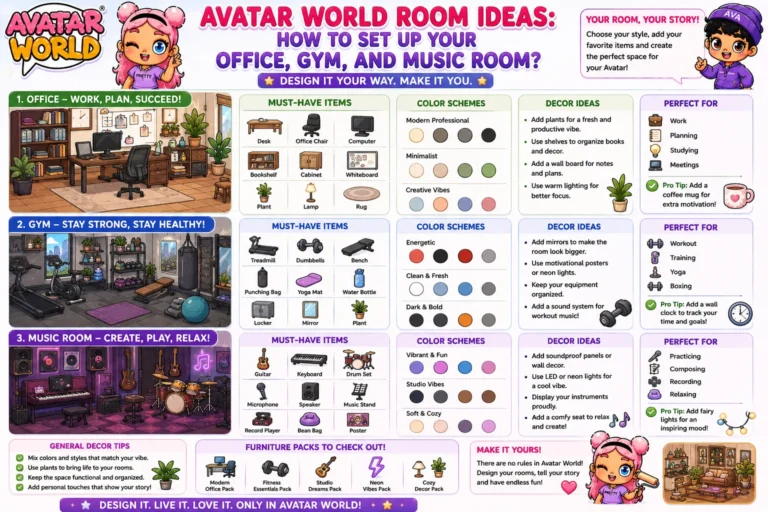
For specialty room setups that fit within these larger designs, including detailed guides for gyms, offices, and music rooms, see our Avatar World room ideas guide.
The Avatar World MOD APK unlocks every furniture piece, wallpaper, and flooring option from installation, so you can build any of these designs without earning coins first. You can find the standard version at Avatar World on Google Play.
Final Thoughts
The best Avatar World house designs are the ones built with a concept in mind, from the first furniture piece to the last decoration detail. Pick a character concept, commit to a room structure, choose your palette, and build with intention. A home in Avatar World is a character statement. Make it say something specific.