The Viral Senate Clash That Captured America: A Deep Analysis of Political Conflict, Media, and Immigration Debate
A 47-second video can sometimes create a political earthquake.
In the modern digital age, a short clip does not need to show an entire conversation to influence millions of people. It only needs one dramatic moment, one emotional sentence, one facial expression, or one confrontation that appears to represent a much larger national argument.
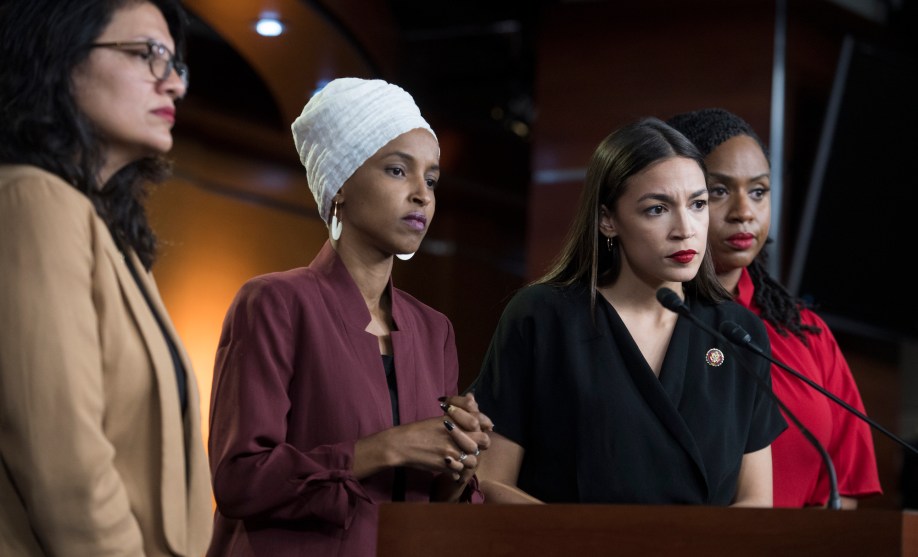
That is exactly why the viral story surrounding Judge Jeanine Pirro, Alexandria Ocasio-Cortez, and Ilhan Omar attracted enormous attention online. The story circulated with a dramatic narrative: a heated immigration hearing, an explosive exchange, accusations about loyalty and patriotism, and a moment that supporters described as a powerful defense of America while critics viewed it as a symbol of political hostility.
However, before examining the meaning behind such a moment, an important distinction must be made. The widely shared descriptions of the confrontation contain many dramatic details, including claims about shouting, physical gestures, and a complete breakdown of the hearing. Those specific details have not been independently confirmed through official hearing transcripts or broadly established news reporting. Fact-checking reviews have noted that viral accounts describe a confrontation but lack reliable confirmation of the full dramatic sequence presented online.
The importance of this story, therefore, is not only whether every second of the viral narrative occurred exactly as described. The deeper issue is why this type of political confrontation captures public attention so quickly, why immigration debates generate such intense emotions, and why Americans from different political perspectives often interpret the same moment in completely different ways.

The Power of a Political Moment
Political history is filled with moments that became larger than themselves.
A hearing room is usually designed for procedure. Lawmakers ask questions, witnesses provide testimony, documents are entered into the record, and disagreements are supposed to happen within formal rules. Yet politics has always contained another element: symbolism.
For many viewers, a confrontation between public figures is not simply about the words spoken in that moment. It becomes a representation of larger beliefs.
Supporters may see a strong statement as courage. Opponents may see the same statement as unnecessary aggression. One side may interpret a passionate defense of national identity as patriotism. Another side may interpret it as an attack on legitimate criticism.
This division explains why short political videos often spread faster than longer discussions.
A complete hearing may last hours. It may involve complex legal arguments, policy details, economic considerations, and competing evidence. But a 47-second clip can remove much of that complexity and leave viewers with a single emotional impression.
The human brain naturally responds strongly to conflict. A disagreement between two recognizable figures creates a simple story structure: two sides, one argument, one dramatic moment.
That simplicity is exactly what makes viral political content powerful.
Immigration: One Issue, Many Different Visions of America
The controversy surrounding the alleged confrontation is connected to one of the most emotionally debated issues in American politics: immigration.
For decades, immigration has represented different things to different groups of Americans.
Some view immigration primarily through the lens of border security, enforcement of existing laws, national sovereignty, and the responsibility of government to control who enters the country.
Others emphasize humanitarian concerns, family separation, economic contributions of immigrants, and the belief that America’s identity has historically been shaped by immigration.
These disagreements are not simply arguments over policy details. They often involve deeper questions:
What values define a nation?
How should a country balance security and compassion?
What responsibilities does a government have toward citizens and non-citizens?
How should a democracy handle disagreement about national identity?
These questions explain why immigration debates frequently become personal and emotional.
Representative Alexandria Ocasio-Cortez has been a prominent voice in debates over immigration policy, including criticism of certain enforcement approaches and arguments focused on humanitarian protections.
Jeanine Pirro has also become known for strong positions on law enforcement, government policy, and national issues. She was confirmed by the Senate as U.S. Attorney for the District of Columbia in 2025, a role that brought her back into the center of political discussion.
Because these figures represent sharply different political identities in the public imagination, any reported disagreement between them is likely to attract intense attention.

Why Viral Political Stories Spread So Quickly
The internet has transformed political communication.
In previous decades, a major political confrontation would usually be filtered through newspapers, television editors, and professional journalists before reaching the public.
Today, millions of people can encounter a political moment directly through social media.
A video can be uploaded, shared, reposted, edited, and commented on thousands of times before traditional media organizations analyze what actually happened.
This creates a new challenge: speed often arrives before verification.
A dramatic headline can travel faster than a correction.
A powerful emotional message can reach millions before viewers examine the full context.
This does not mean every viral story is false. Many genuine political moments become widely shared online. But it does mean that viewers increasingly need to separate three different things:
What is shown in the video.
What people claim happened around the video.
What can actually be verified through records and independent reporting.
That distinction is especially important in politics because emotional reactions can influence how people understand candidates, officials, and public issues.
The Role of Patriotism in Political Debate
One of the central themes in the viral narrative is patriotism.
Few words carry as much emotional meaning in American politics as the word “patriotism.”
For some Americans, patriotism means respecting national institutions, honoring the flag, supporting military service members, and defending national traditions.
For others, patriotism includes criticizing government decisions, demanding reform, and believing that questioning leaders is part of democratic responsibility.
Both interpretations have existed throughout American history.
The disagreement often comes from different definitions of what love for a country requires.
One person may believe loyalty means defending the nation from criticism they consider unfair.
Another may believe loyalty means criticizing the nation when they believe it can improve.
This difference explains why political arguments about patriotism often become much more intense than ordinary policy disagreements.
The debate is no longer only about immigration numbers, border procedures, or legislation. It becomes a debate about identity and belonging.
Why Political Theater Matters
American politics has always included moments of political theater.
Speeches, debates, hearings, and public appearances are not only attempts to influence lawmakers. They are also performances directed toward the public.
Politicians understand that cameras are present. They understand that memorable moments can shape public perception.
A carefully chosen phrase can become a headline.
A dramatic exchange can become a campaign message.
A short video clip can become a symbol for millions of people who already hold strong opinions.
This does not mean every public statement is calculated. Politicians and public officials often genuinely express strong beliefs.
But modern politics exists in an environment where every moment can become content.
The question is no longer only: “What happened?”
The question also becomes: “How will this moment be remembered, shared, and interpreted?”
The Importance of Full Context
One of the greatest challenges of the digital era is understanding events beyond the most emotional fragment.
A short video can show anger but not the conversation before it.
It can show a reaction but not the argument that created that reaction.
It can show a dramatic sentence but not the evidence, rules, or procedures surrounding the discussion.
For this reason, serious political analysis requires patience.
The public deserves access to complete information.
Officials should be evaluated based on documented actions, statements, and records rather than only viral moments.
Citizens can disagree strongly while still asking the same basic questions:
What exactly happened?
Who is making the claim?
What evidence supports it?
What information is missing?
These questions are essential in any democracy.
A Nation Watching Itself Argue
The deeper meaning behind viral political conflicts is that they reveal something about the country itself.
America has always contained competing visions of its future.
Different generations have argued over immigration, civil rights, economic policy, foreign affairs, and the role of government.
The arguments can become intense because people believe the issues represent fundamental values.
The viral confrontation involving Judge Jeanine Pirro, AOC, and Ilhan Omar became popular because it reflected those larger divisions.
To some viewers, it represented a demand for stronger national identity.
To others, it represented the dangers of turning political disagreement into personal attacks.
The reason the moment attracted attention was not only the individuals involved. It was because millions of Americans saw their own concerns, frustrations, and beliefs reflected in the conflict.
The Lesson Behind the Viral Moment
In the end, the biggest story may not be the argument itself.
The bigger story is how Americans consume political information in the modern era.
A short clip can create a national conversation.
A dramatic headline can shape emotions.
A single moment can become a symbol for millions of people.
But democracy requires more than emotional reaction. It requires examination, evidence, and willingness to understand different perspectives.
Political disagreements are inevitable. They have existed throughout American history and will continue to exist.
The challenge for citizens is not avoiding disagreement.
The challenge is learning how to disagree while still searching for truth.
In an era where every camera can create a viral moment, the most important question is not simply who appeared to win an argument.
The most important question is whether the public understands what actually happened, why it mattered, and what it reveals about the country’s ongoing conversation about identity, freedom, and the future.